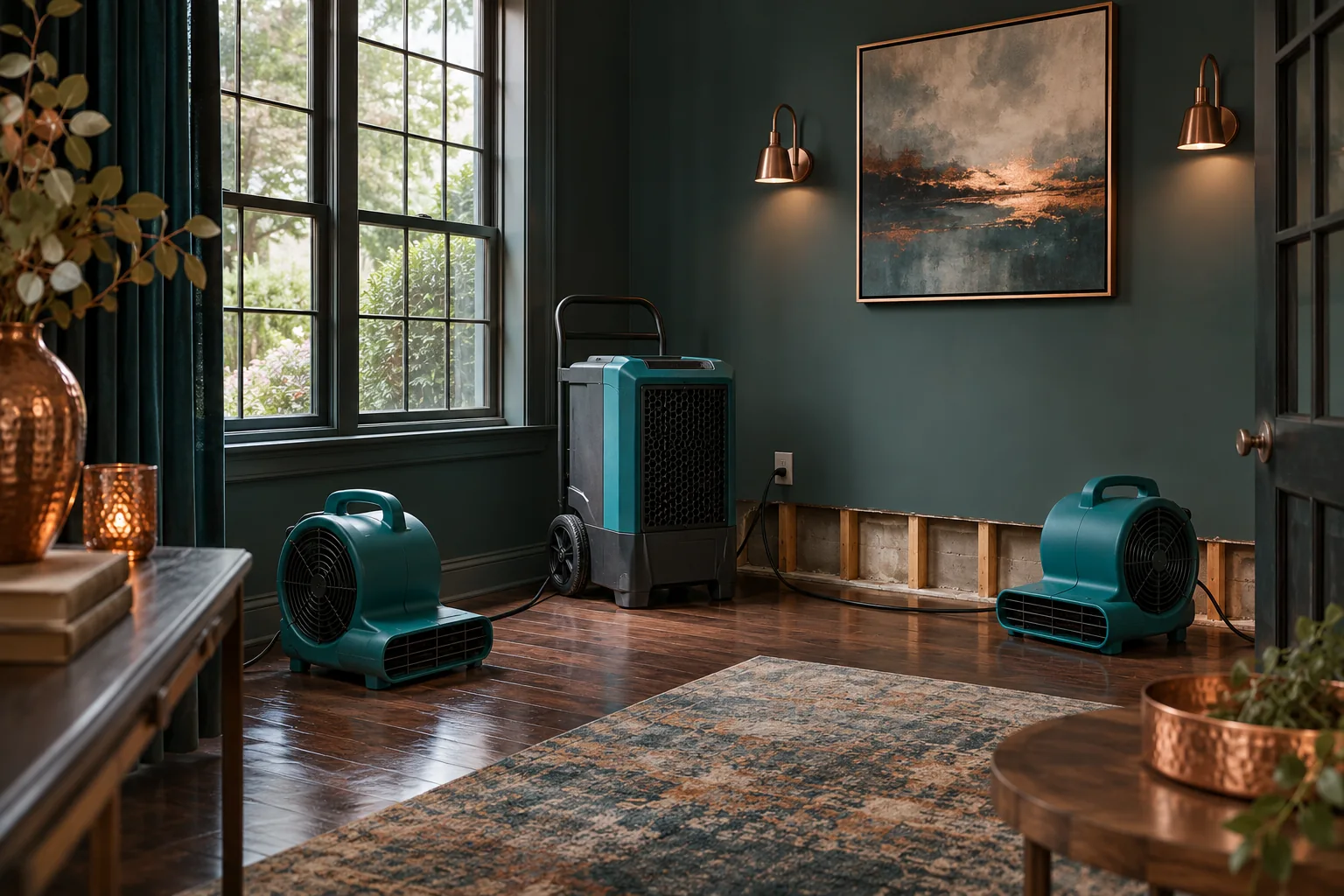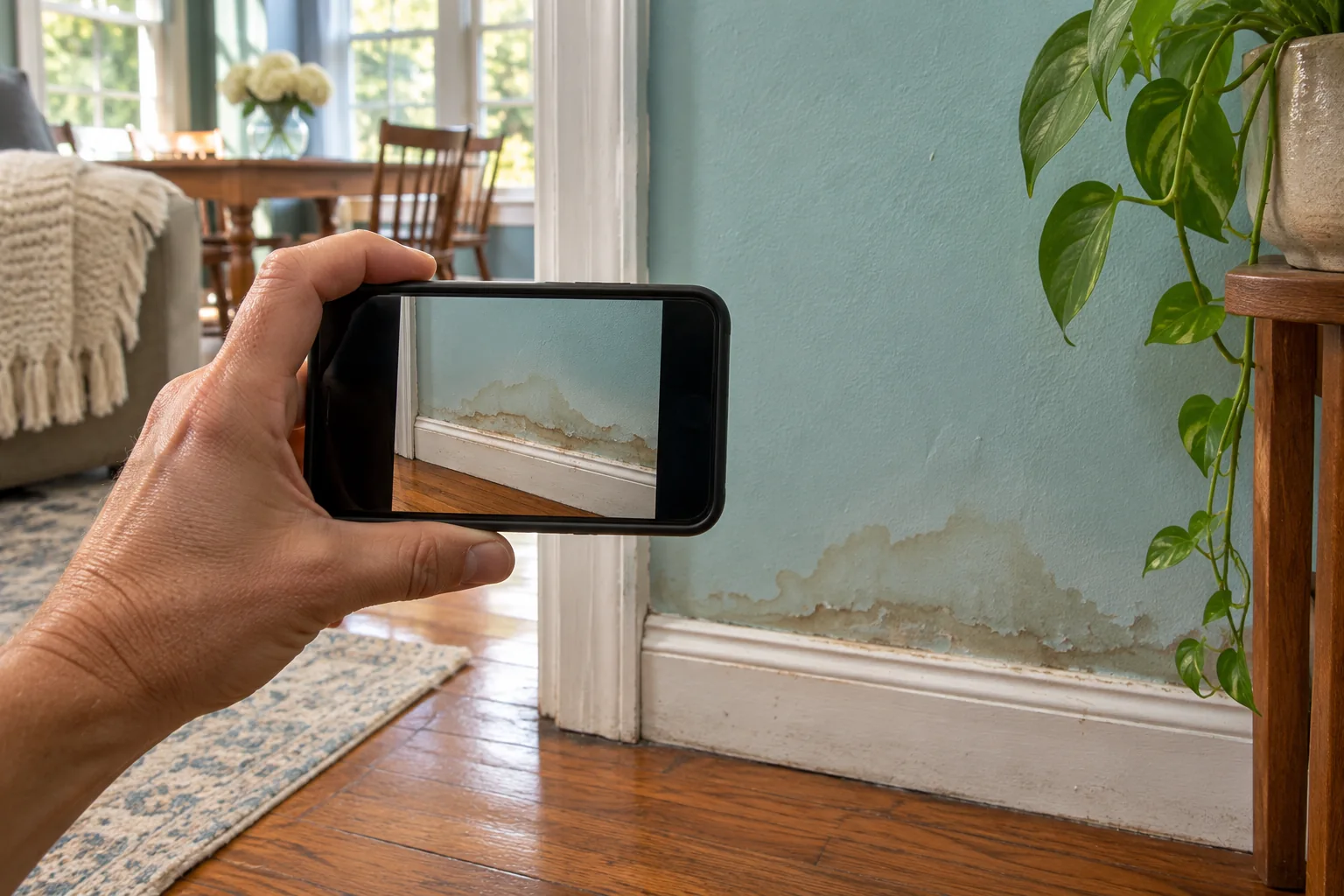
Treat stopping the leak and assessing the damage as separate jobs
An indoor leak often begins with an obvious concern: water is still arriving. If you know a safe way to stop the source from a dry location, follow the relevant household or professional instructions. If the source or safe access is uncertain, seek appropriate help rather than experimenting with valves or electrical equipment. Keep people away from wet electrical devices and any area with an unresolved safety concern.
Once the source has been addressed, a second conversation may still be needed about water that reached floors, walls or belongings. A plumbing or appliance repair does not automatically include water extraction and drying. Likewise, a water removal visit does not automatically include repair of the failed connection or machine. Confirm the responsibility of each company before assuming one appointment covers everything.
Build a useful timeline
Record when the room was last known to be dry, when the leak was discovered and when any source control occurred. If nobody was home, describe the interval rather than assigning a precise duration. Note whether water was visible only near the source or also in another room or on a lower floor. This helps the assessor understand what is known and what remains uncertain.
Keep any repairer's diagnosis and invoice with that timeline. Distinguish a confirmed failed component from a suspected cause. If a hose was replaced, record that fact without assuming it explains every damp area in the house. The next professional may need to understand the sequence of repairs and observations, particularly if new water appears after the initial source was thought to be controlled.
Describe the route water may have taken
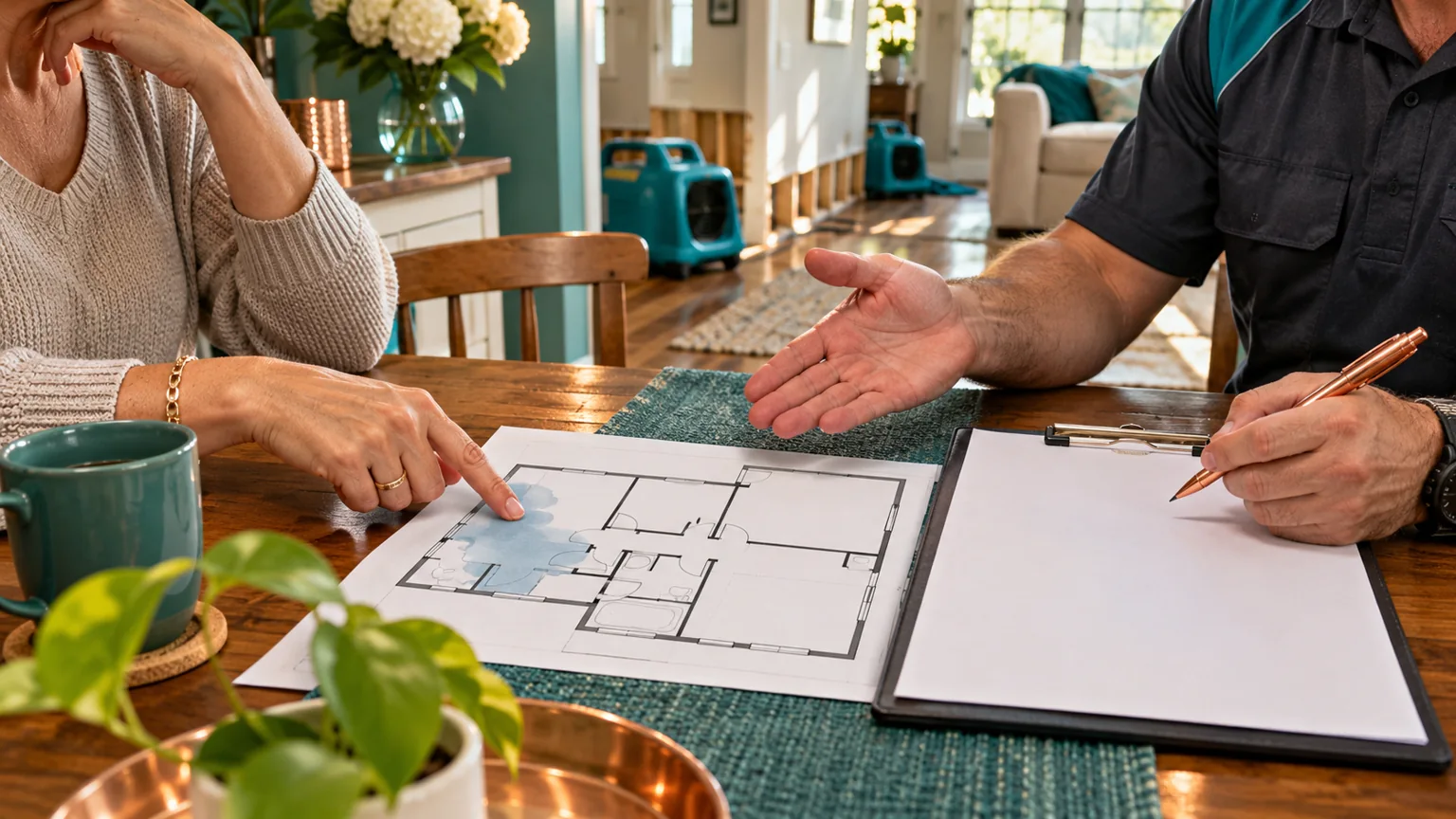
From a safe location, note the affected surfaces and adjoining spaces. A wet kitchen floor, a cabinet base and a ceiling below the kitchen are separate observations worth sharing. Do not take apart cabinets, lift flooring or open a ceiling to trace the route yourself. Ask the provider how it will assess the visible area and decide whether additional spaces need inspection.
Mention any work already performed, including towels used, belongings moved or a surface opened by another professional. These changes are not a reason to avoid assessment; they are context that should be documented. Photographs from before and after source repair can help explain differences between what you first saw and what the assessor encounters on arrival.
Do not let familiar appliances create false certainty
Water near a dishwasher or washing machine can prompt a quick assumption that the incident is simple. Explain what was operating, what you observed and whether the source has been professionally identified. The cleanup plan should follow the actual water source, condition and affected materials rather than the appliance name alone. Report any drain involvement, unusual odor or other concern when requesting service.
Ask whether the provider handles the incident described and whether another specialist is required. Plumbing repair, appliance repair, contaminated-water work and mold remediation may fall outside the service offered. Clear-looking water and a small visible puddle are not enough to define the complete job over the phone. A useful response explains what can be established before a visit and what needs assessment.
Coordinate access and authorization
If two companies need to visit, ask what each needs from the other before work can proceed. For example, the water removal provider may need confirmation about the source, while the repair company may need access to an area containing drying equipment. Establish a single contact who can share records and approve changes so that neither crew relies on an incomplete message passed through another person.
In a rental, condominium or shared building, notify the responsible owner or manager through the established process. Clarify who can authorize work in the affected space and any adjoining property. This is an organizational step, not a statement about legal responsibility. Follow the relevant agreement and seek appropriate advice if responsibility or access is disputed.
Close the incident with more than a repaired part
Before considering the matter finished, ask each provider to identify what it completed and what remains outside its scope. Keep the source repair record separate from the assessment or drying record. If finish repairs are needed, ask what information the repair contractor should receive before covering the affected area. Do not assume that removal of equipment means every repair in the room is included.
EPA's homeowner guidance emphasizes correcting moisture problems and responding promptly to leaks. For your incident, turn that principle into a practical question: what evidence shows the source is addressed, and what follow-up is recommended for affected materials? The answer should be specific to the property. No general article can promise a drying time, salvage outcome, insurance payment or future freedom from leaks.
Further reading
Reviewed November 23, 2026. General homeowner information; the provider determines the specific assessment and scope.