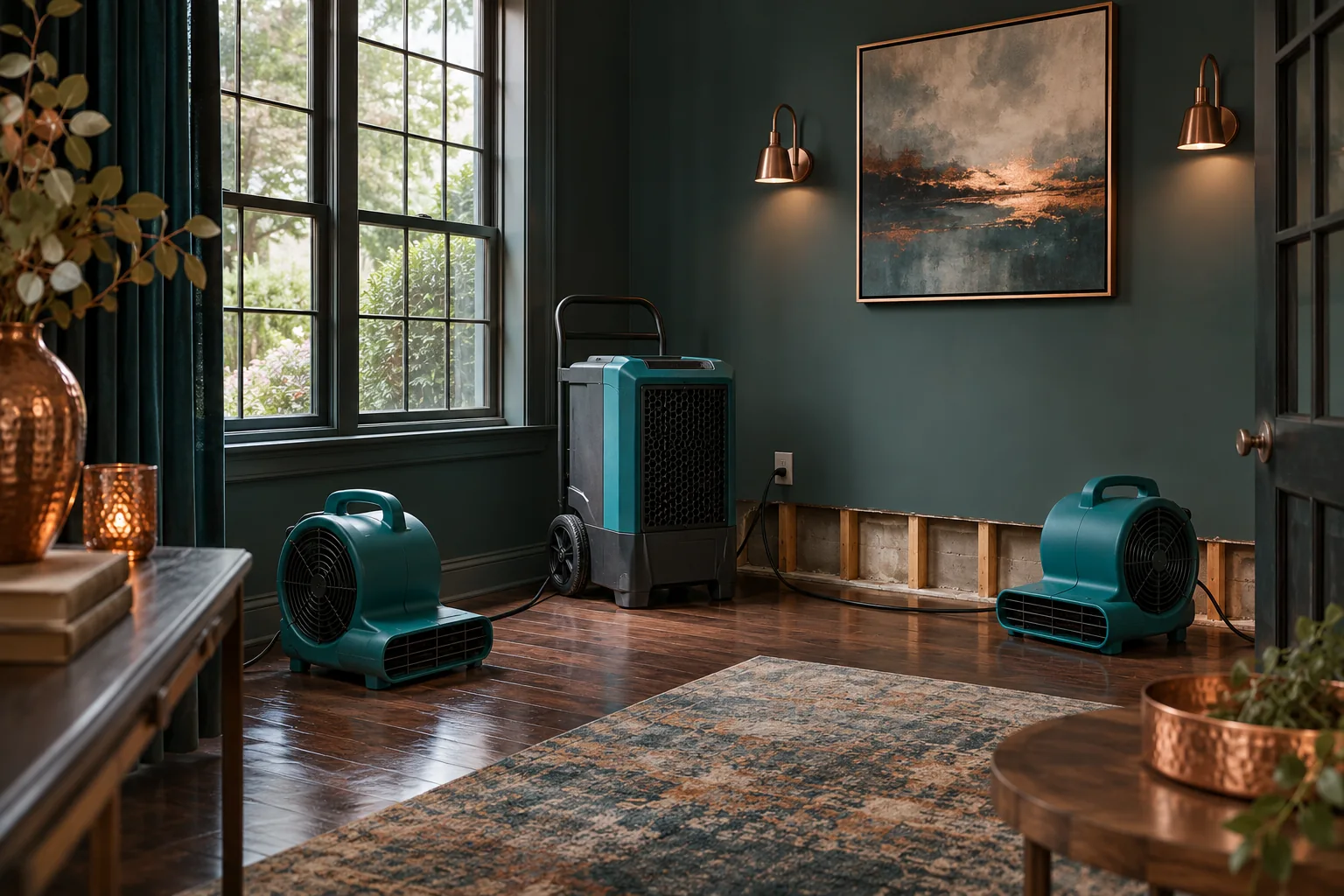
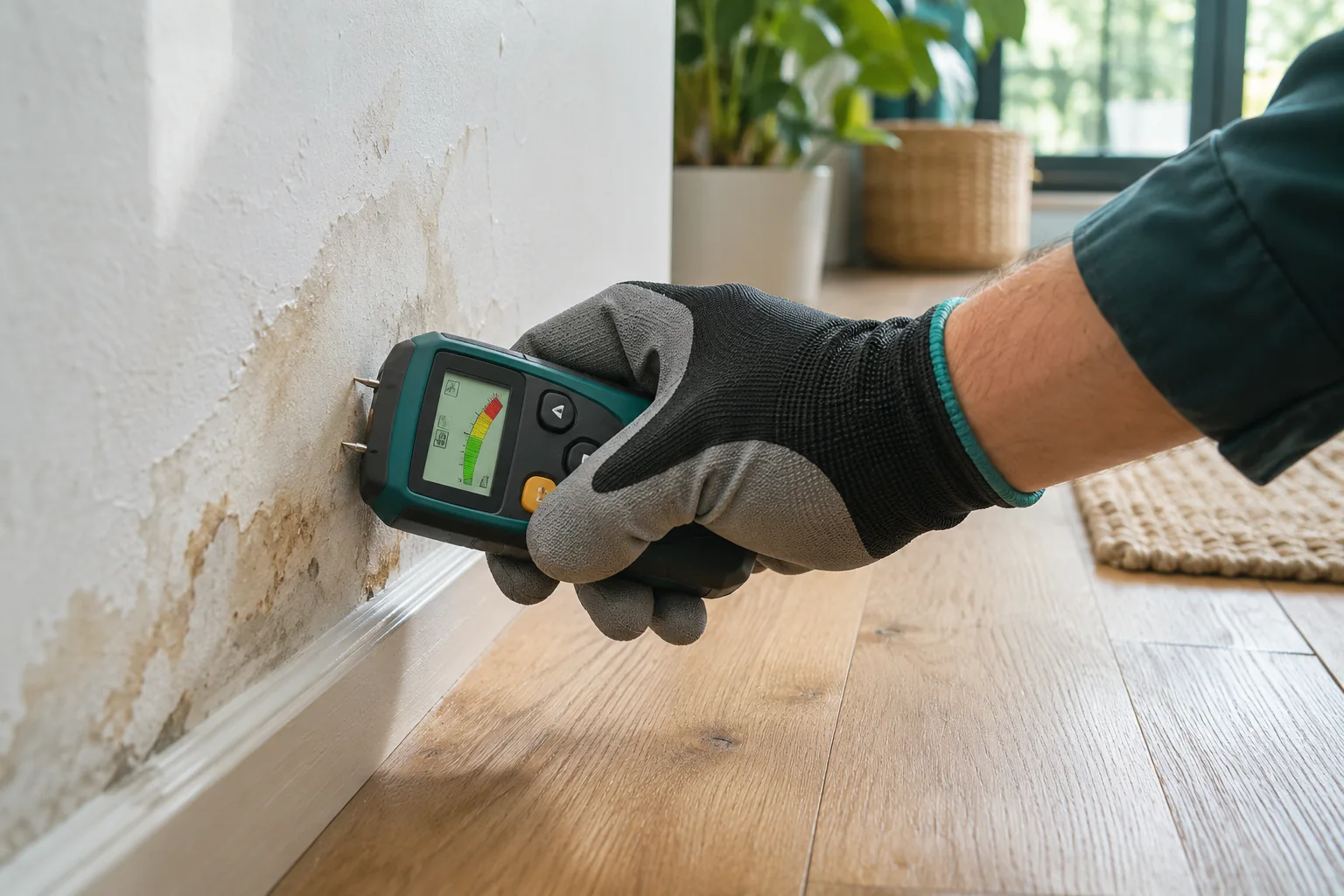
Drying starts with an assessment
A drying plan should be based on affected materials and measured conditions, not only on the visible size of a wet patch. Ask what areas will be checked, how initial readings will be recorded and what the provider expects to monitor during the work.
Air movement and moisture removal
Professional air movers and dehumidifiers may be used together when conditions are appropriate. Equipment selection and positioning depend on the room, materials, electrical safety and contamination. Avoid moving or unplugging installed equipment without discussing it with the provider. The equipment plan should also account for how people can use the home safely.
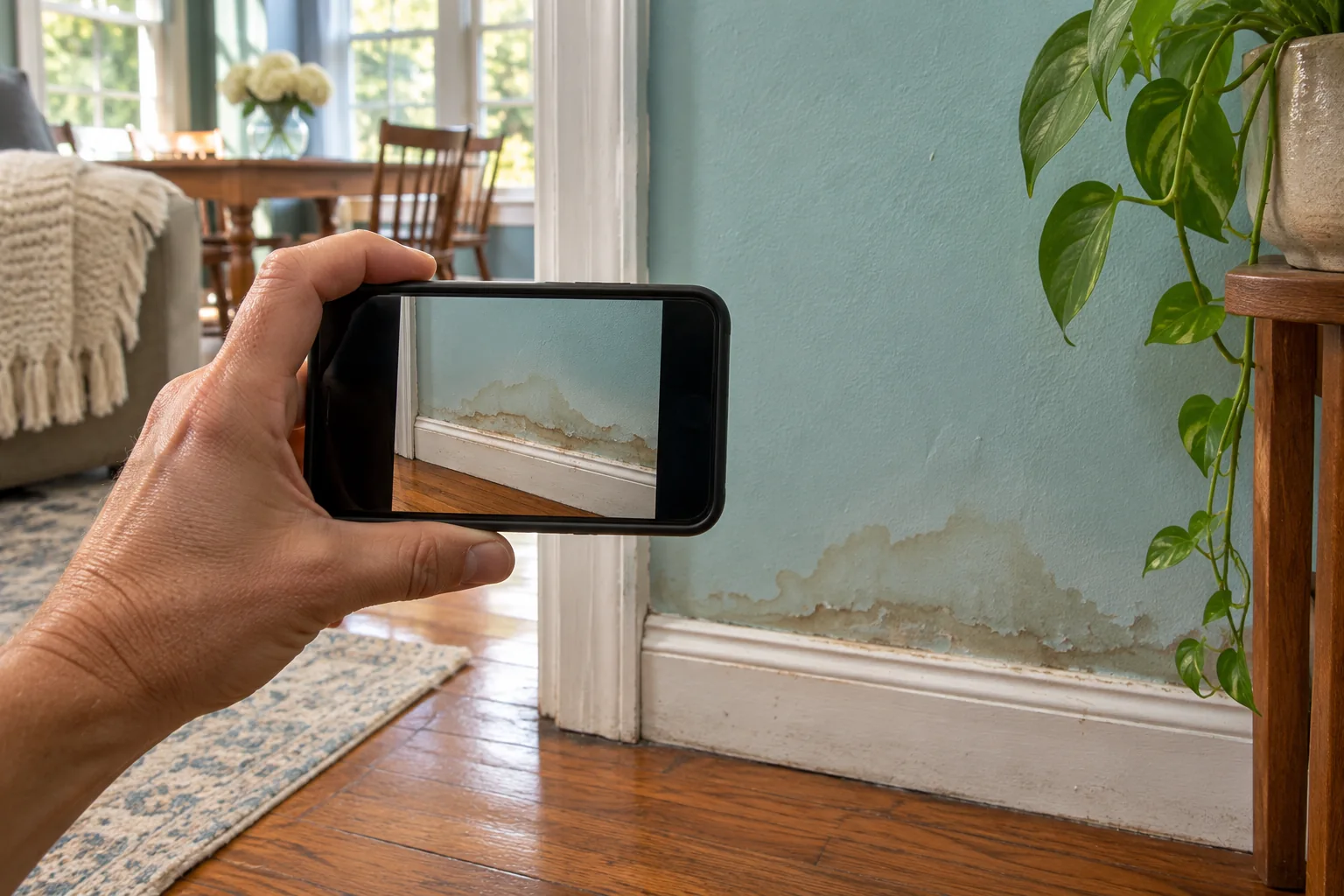
A surface can feel dry before the assembly is ready
Moisture may remain beneath a finish or inside a building assembly. Ask how the provider will check concealed or less accessible areas and what limitations the inspection has. A visual check alone should not be presented as proof that every affected layer is dry.
Discuss monitoring and completion
Ask how often the provider expects to inspect progress, how equipment rental or monitoring is charged, and what record you will receive at completion. There is no single drying time that can be promised for every home. The original water source also needs to be controlled to avoid continued wetting.
Prepare for the repair handoff
Before rebuilding or refinishing, ask for the final scope and moisture documentation relevant to the affected materials. Clarify any areas that remain inaccessible or require further assessment. If odors, staining or dampness recur, report them rather than assuming the initial work resolved every cause.
Prepare for the conversation
Have your ZIP, water source, affected rooms and safety concerns ready. Only collect details from a safe place.