Start with the source and the setting
Water removal begins with understanding where the water came from, whether it is still entering, and which materials have been affected. An appliance supply leak in a room is a different situation from outdoor flooding or a sewage backup. Explain those differences before discussing equipment or scheduling. The provider should determine whether the conditions are within its scope and safe to enter.
What removal may involve
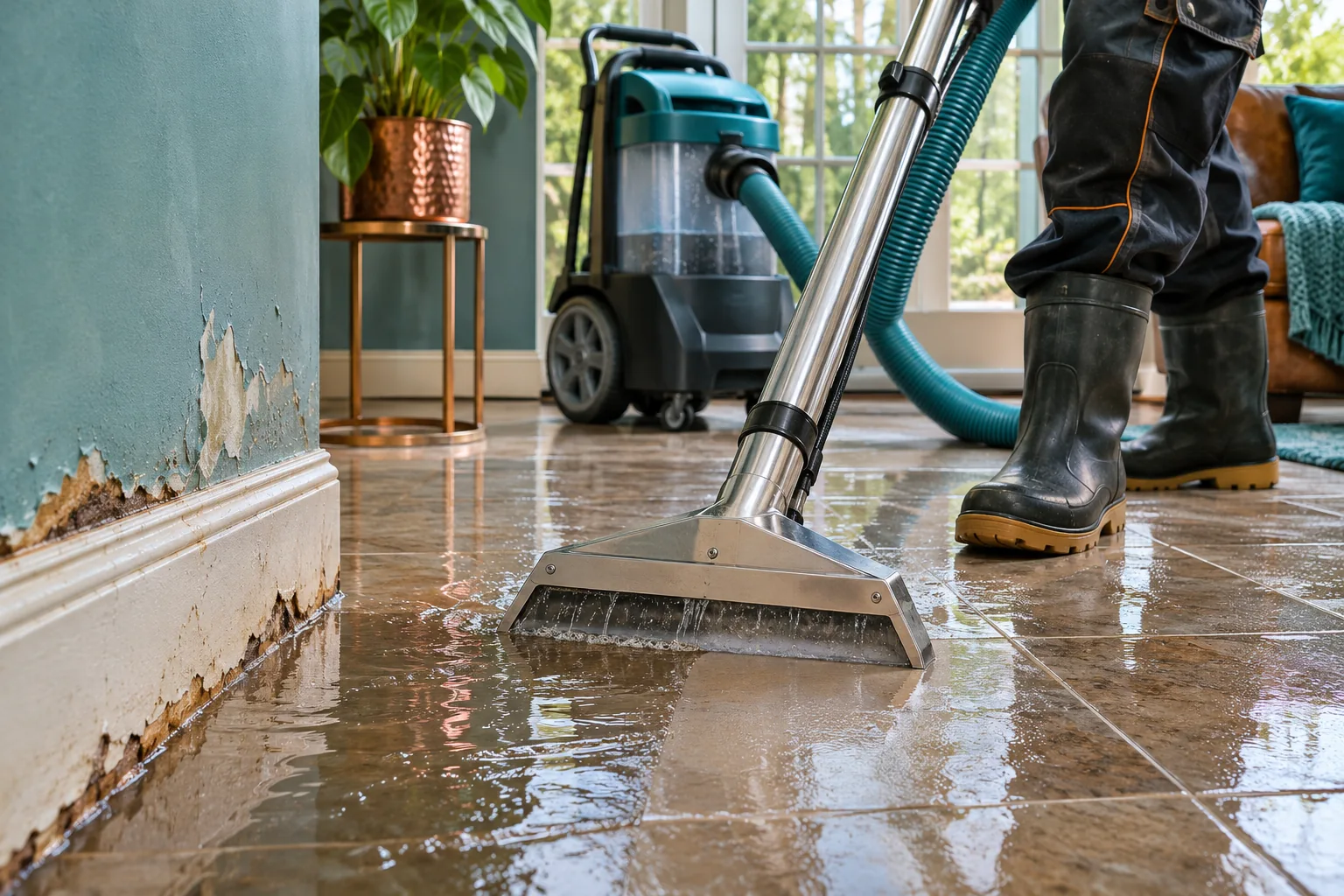
A provider may use extraction equipment to remove standing water from accessible surfaces. The appropriate method depends on the amount of water, access, contamination and the material beneath it. Removing water does not itself repair the plumbing or building defect that caused it. Ask whether source repairs require a separate trade and who will coordinate that work.
Look beyond the visible puddle
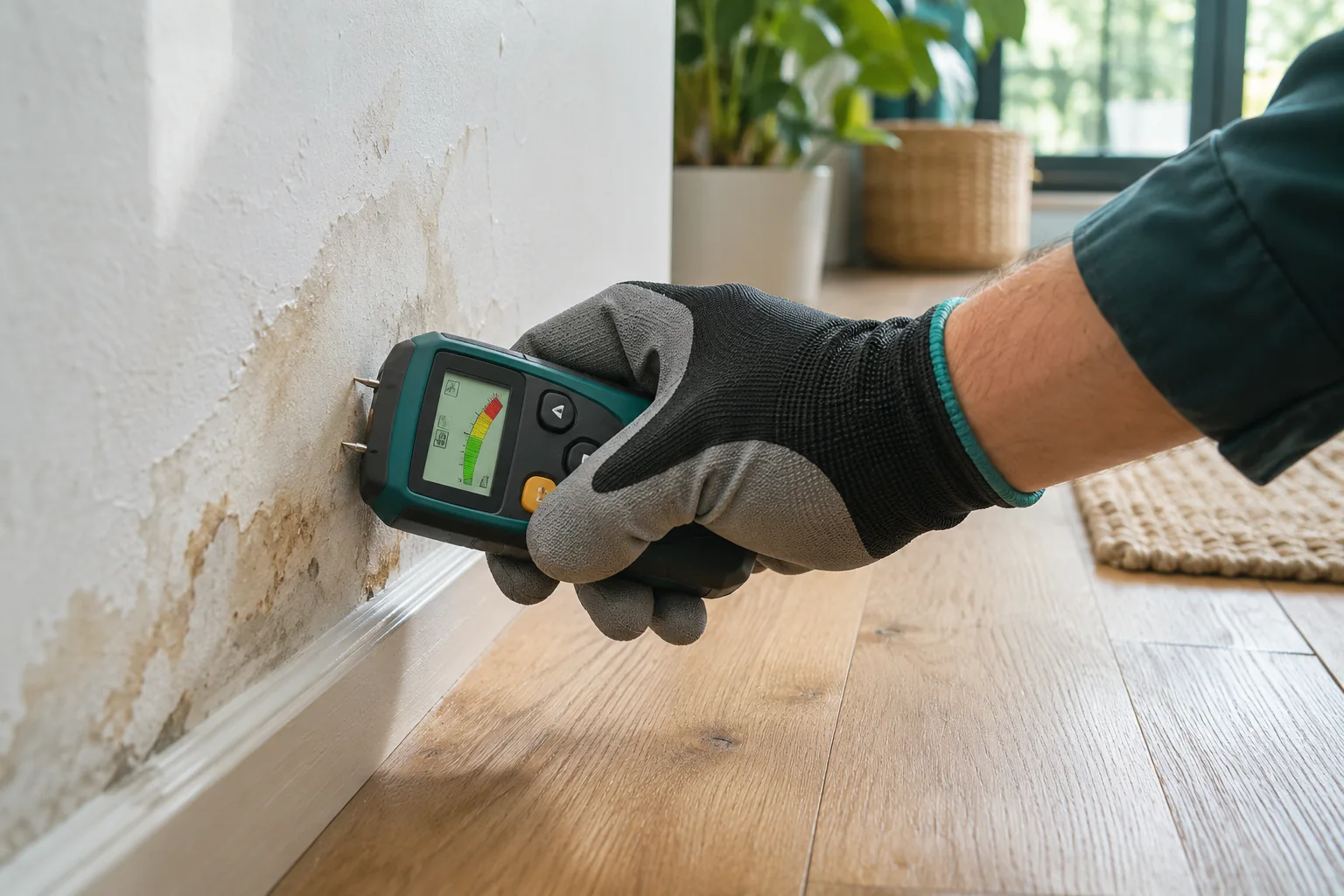
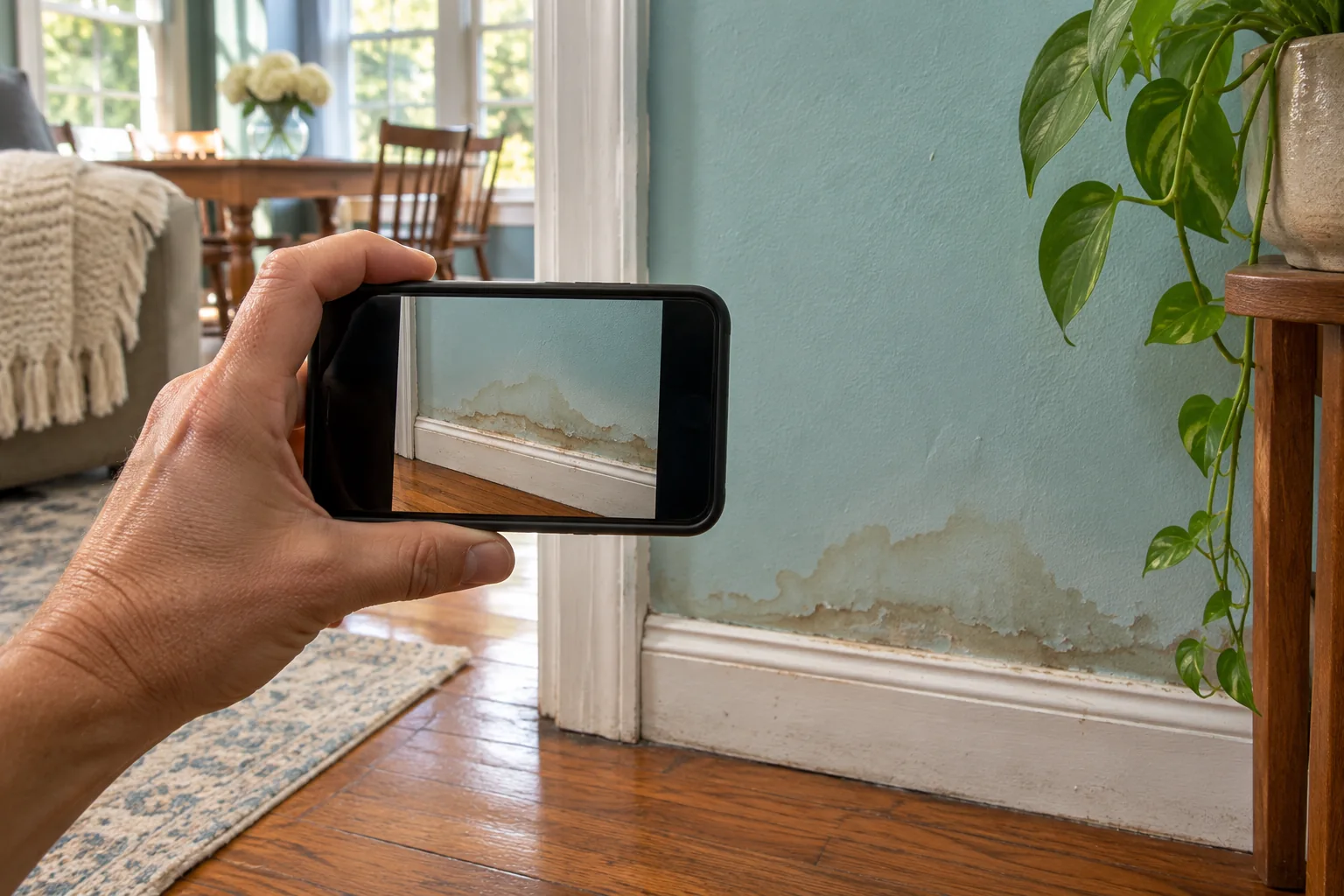
Water may travel beneath floor coverings, into wall cavities or to lower rooms. Ask how the provider will identify the affected materials and decide which can be dried. Do not rely on a dry-looking surface to confirm that concealed materials are ready to close or refinish.
Questions before authorizing work
Ask what the assessment covers, whether there is a visit charge, how extraction is priced and how a change in scope will be approved. Clarify whether disposal, material removal, monitoring and reconstruction are included. Keep the proposal and any later changes in writing.
When a different specialist may be needed
Tell the provider about sewage, outdoor floodwater, visible mold, damaged electrical systems or structural movement. This website also covers fire damage removal, mold removal and biohazard cleanup. Those specialties have separate scopes and their availability must be confirmed for the address. Never enter an unsafe room to gather information for a call.
Prepare for the conversation
Have your ZIP, water source, affected rooms and safety concerns ready. Only collect details from a safe place.