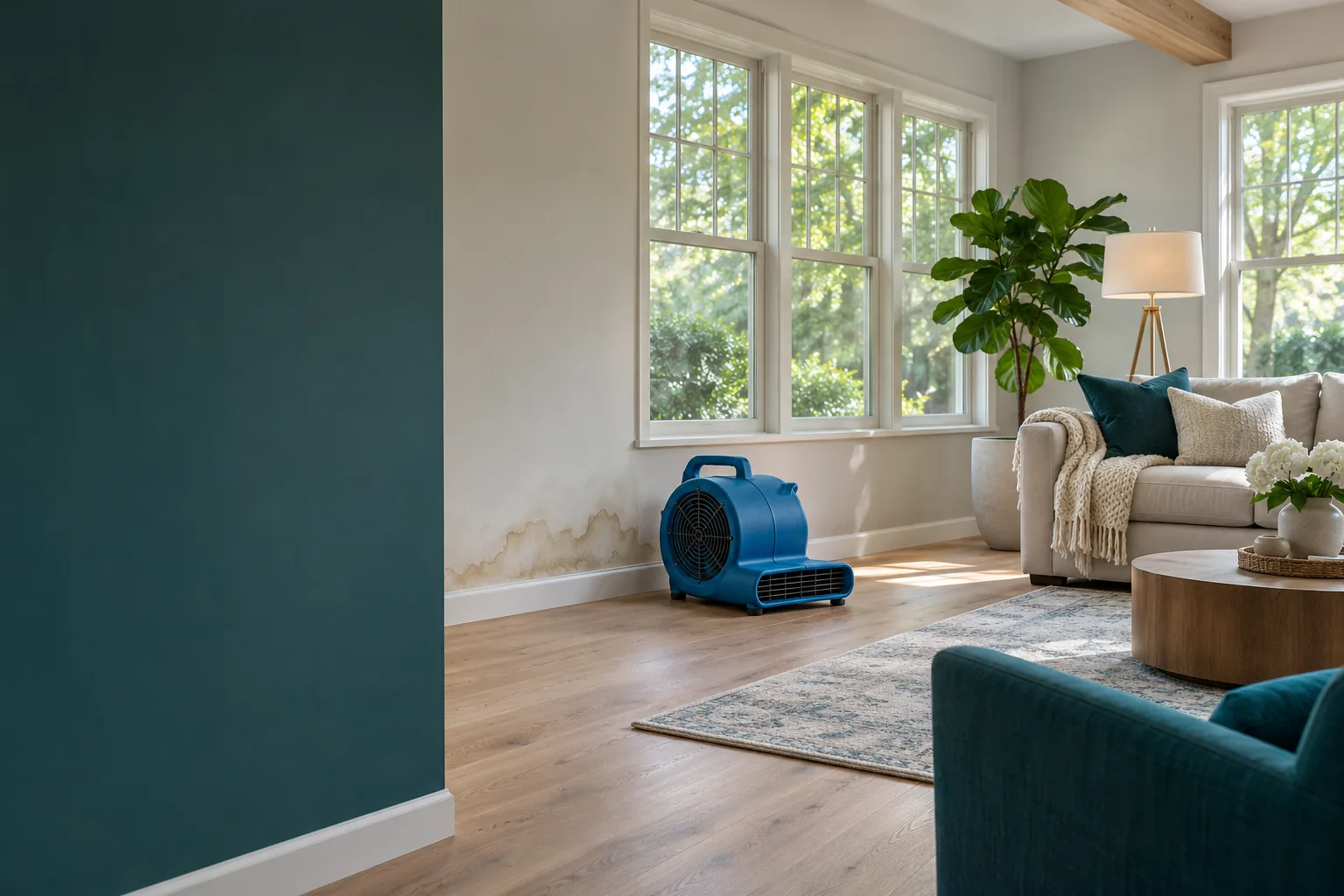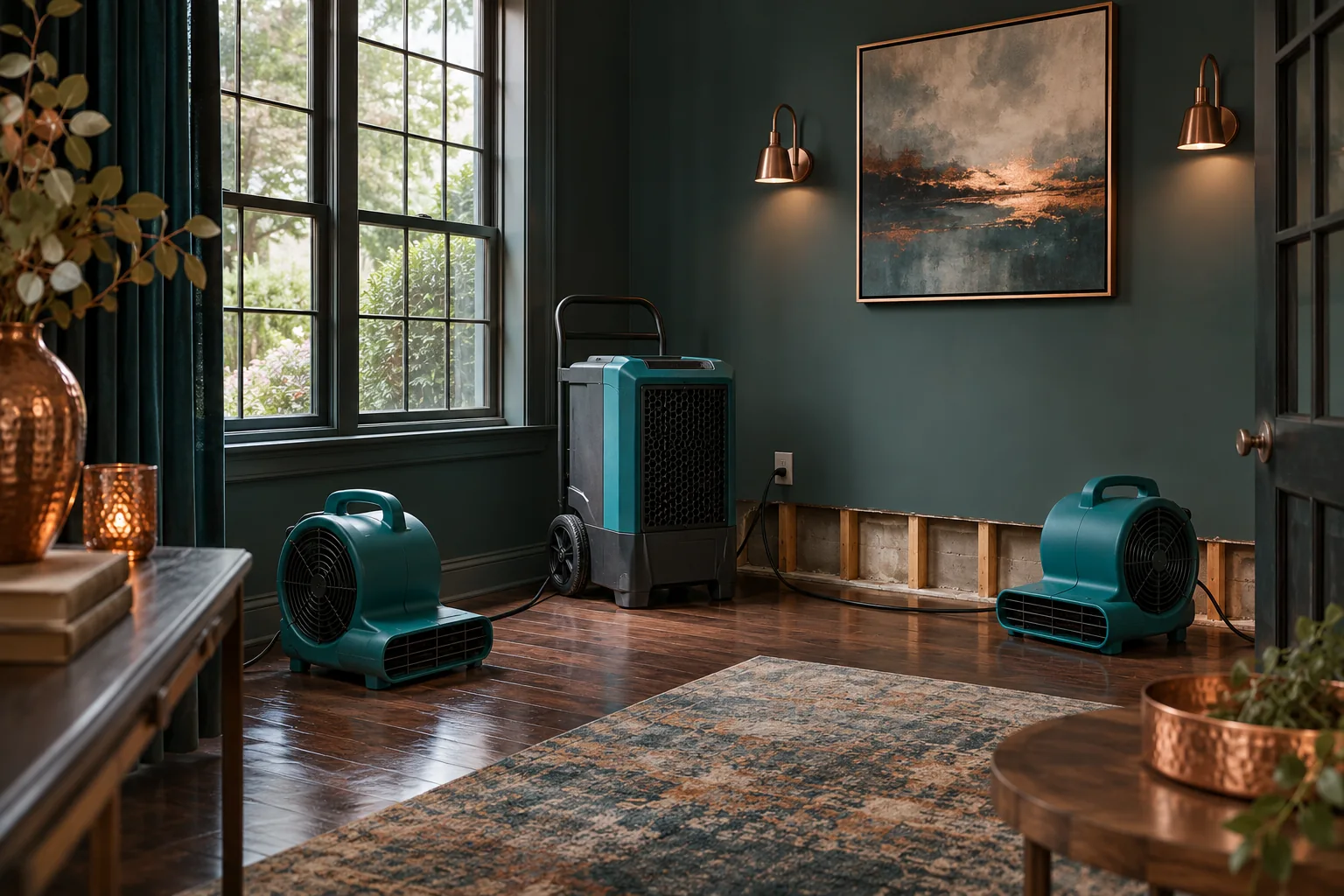
Make documentation a safe task
A useful record starts with what you can observe safely. Do not enter a restricted building, walk through standing water or stand beneath a damaged ceiling to improve a photograph. If an area cannot be reached, label it as inaccessible and explain why. A partial but accurate record is preferable to a complete-looking account that required unnecessary risk or guesses about unseen conditions.
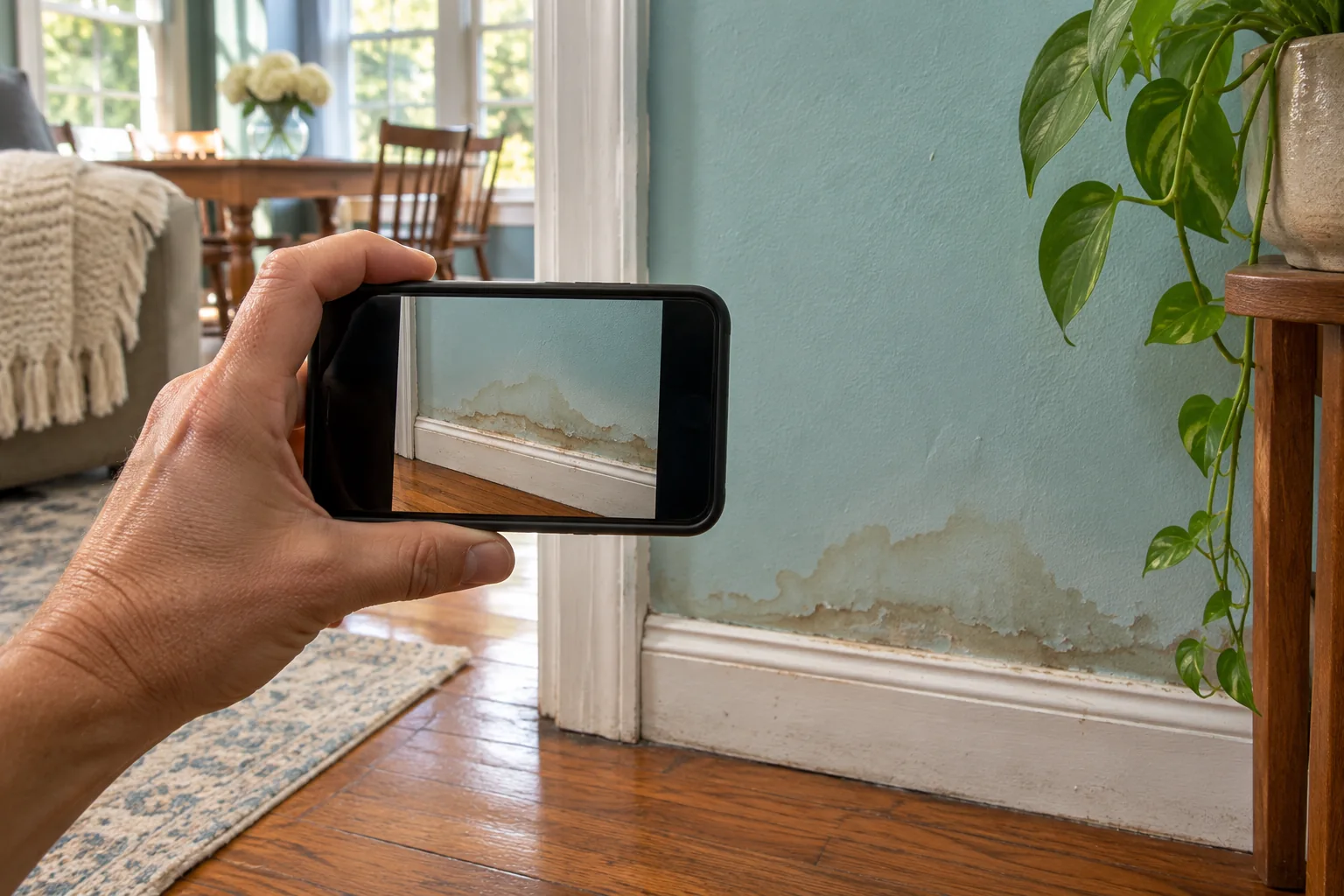
When safe access is available, begin with the overall room before concentrating on individual items. The National Flood Insurance Program recommends photographs and video before cleaning, repairs or disposal, including both wider views and details. This guidance is about documenting flood losses; your insurer can explain the requirements for the particular policy and incident. Documentation does not establish that a loss is covered.
Use a room-based filing system
Create a folder with the incident date and property identifier, then divide it by room or area. Keep original photographs as well as any copies you annotate. A sequence such as kitchen-overview, kitchen-sink-cabinet and kitchen-floor-edge helps a person who has never visited the home understand the relationship between images. Use plain descriptions instead of technical labels that you cannot verify.
Add a short note for each area: when the problem was noticed, what is visible, who has inspected it, and what remains unknown. If several people are taking photographs, agree on room names first. Calling the same space den, study and rear bedroom can make a record unnecessarily hard to follow when documents are shared with a provider or insurer.
Record belongings with enough detail to identify them
For damaged belongings, note the item, its room, and any identifying information available without unsafe handling. Photographs of appliance model and serial labels can be useful when they are accessible. The NFIP specifically recommends recording serial numbers and keeping relevant receipts. Do not unplug, open or operate a wet appliance to find out whether it still works for the sake of an inventory.
Separate facts from estimates. If you do not know an item's purchase date or original price, write unknown and look for records later. Avoid assigning a replacement value simply because an online listing resembles the item. The goal at this stage is a clear, supportable inventory. Ask your insurer which valuation information it needs and how to submit corrections if better records become available.
Connect work records to the original condition
Keep each estimate, authorization, change order and invoice under the name of the company that issued it. If one company stops a leak and another removes water, preserve both records and identify their separate tasks. Add the date of each visit and the name of the person you spoke with. Save written explanations of additional findings alongside photographs of the affected area.
Ask providers to describe line items that are unclear before approving them. For example, equipment time, material removal and reconstruction should be understandable as distinct parts of a proposal when they are separate charges. Your own timeline can then show what happened, when it happened and which company performed it, without trying to rewrite the provider's technical report.
Ask about disposal before making assumptions
A damaged item can raise both practical and documentation questions. Ask the insurer or adjuster what record it wants before disposal, and ask the responsible professional how to handle items that present a health or safety concern. FEMA guidance emphasizes photographing damage and retaining receipts while allowing hazardous flood-damaged items to be discarded after documentation. Do not keep unsafe material inside merely because you assume every item must remain until an inspection.
If small material samples are requested, ask who should obtain and store them safely. Do not cut into an unknown building material yourself. Record the disposal date and retain any collection receipt when available. Local waste instructions may change after a widespread flood, so confirm current arrangements with the local authority rather than relying on another community's procedure.
Keep the record usable after the first week
Store a backup in a place you can access if the affected computer or phone becomes unavailable. Share copies only with the people who need them, and avoid posting personal documents or account details in a public review or social media thread. A simple contents page listing the rooms, providers and outstanding questions can make a large folder much easier to use.
End each update with what remains unresolved: an inaccessible cavity, a missing invoice, an item awaiting assessment or a question for the insurer. A good record does not have to look professionally produced. It needs to preserve the evidence and explain the sequence accurately. This organizational approach can support service discussions, but it cannot determine claim eligibility, payment amounts or contractual rights.
Further reading
Reviewed November 23, 2026. General homeowner information; the provider determines the specific assessment and scope.