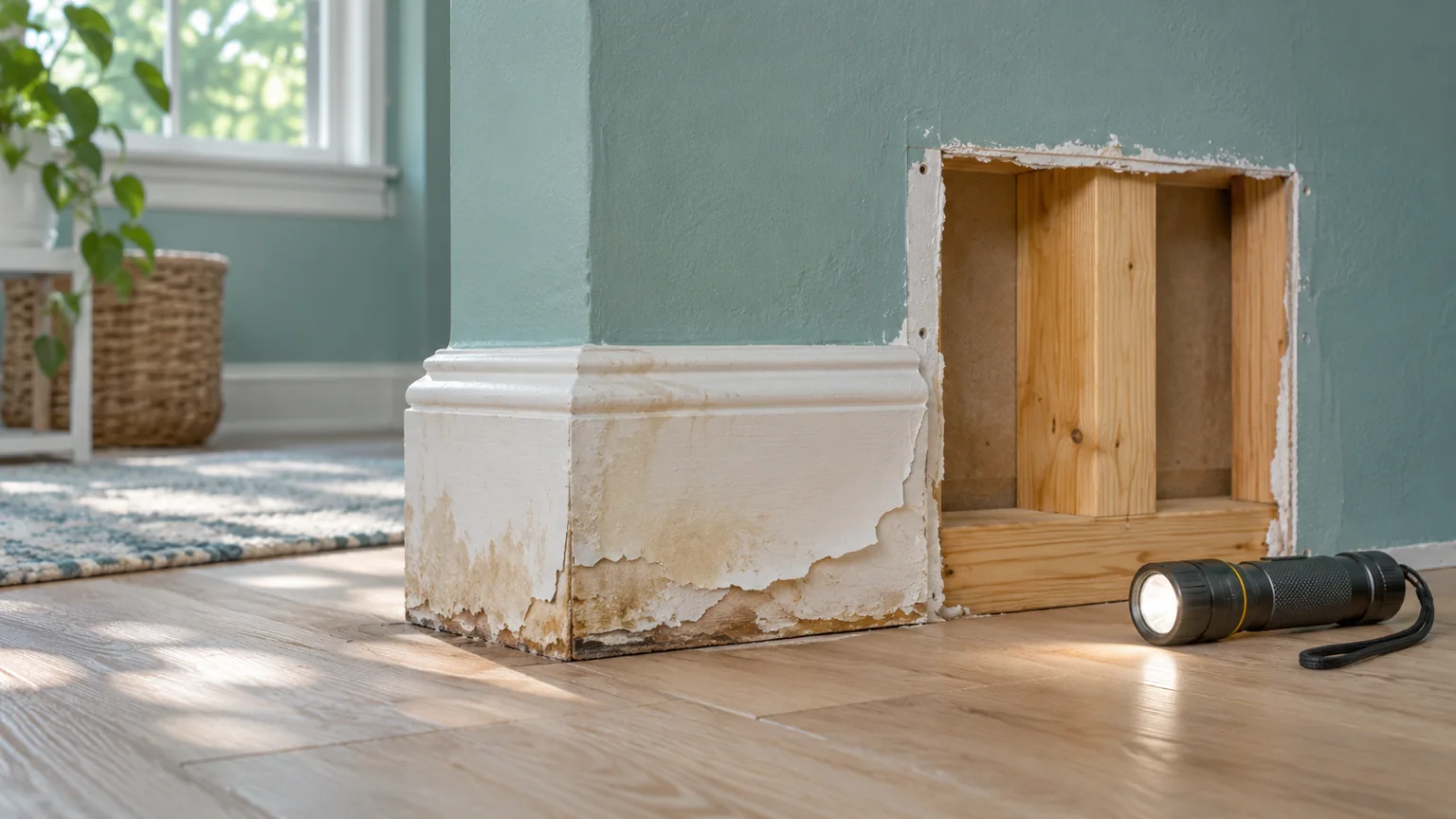
Describe materials, not just the room
When a room is wet, it is tempting to report only the room name and approximate size. A more useful description includes the surfaces you can identify safely: carpet over an unknown underlayer, tile beside a cabinet, a wood floor, painted drywall or a ceiling below another room. Tell the provider which materials are visibly affected and which are concealed. Unknown is a valid and useful description.
Do not peel back finishes or remove baseboards simply to improve the description. Opening a surface can create additional hazards or disturb materials that require special handling. Ask the assessor what access is needed, why it is needed, and how any proposed opening will be authorized. The assessment should establish the next step rather than requiring the homeowner to perform exploratory demolition.
Distinguish appearance from an assessment
A dry-looking surface is not a complete account of the condition underneath it. Massachusetts public-health guidance notes that materials can contain significant moisture without appearing visibly wet. A stain, a soft area or a lifted edge may help identify where to investigate, but those observations do not independently establish how far water traveled or whether a material is ready to cover again.
Ask the provider how it will assess the relevant layers and how the findings will be recorded. For flooring, that may include a discussion of the material below the visible finish. For a wall, ask what is known about the cavity and what remains inaccessible. Request an explanation that distinguishes measured findings, visible observations and professional judgments made from the available information.
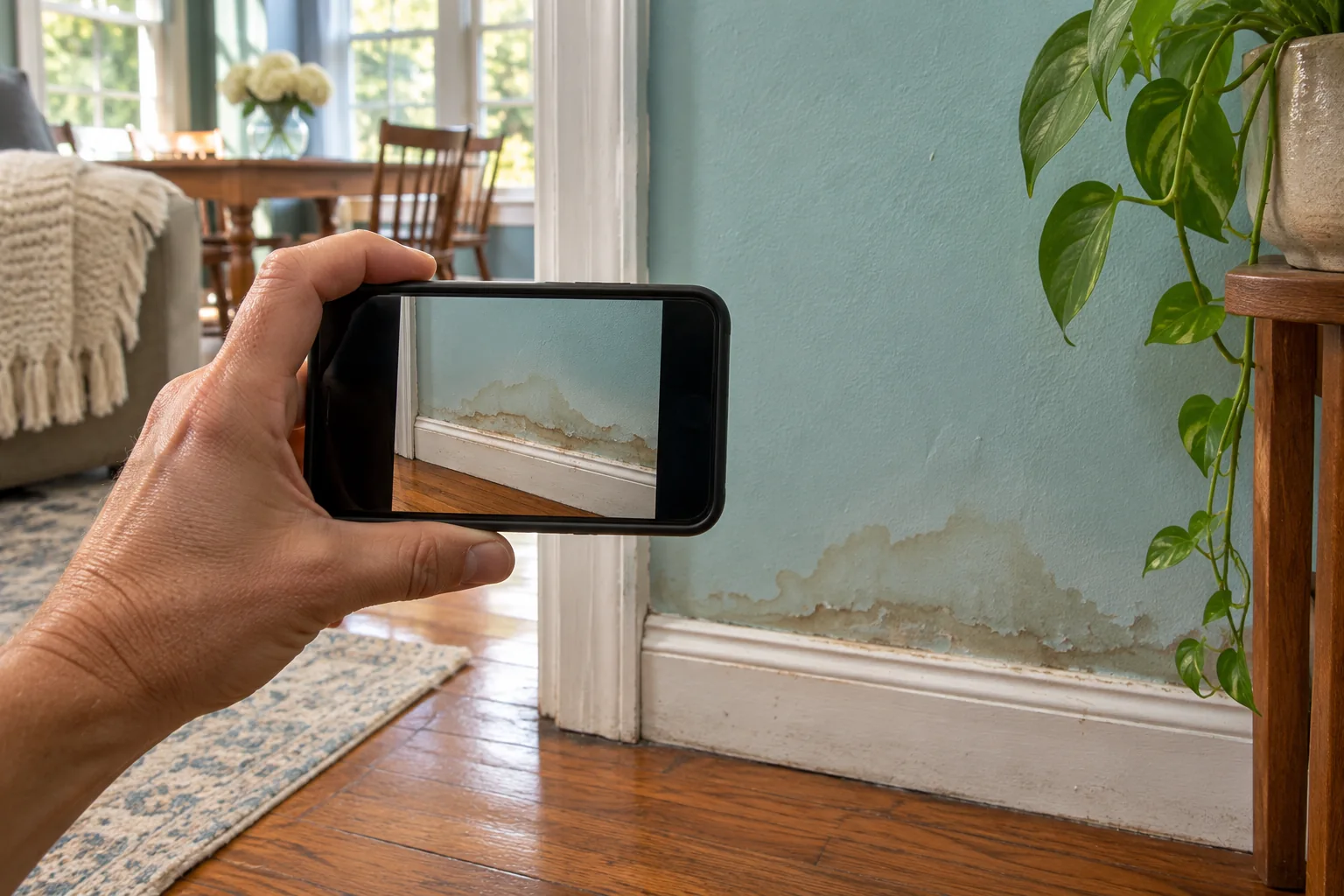
Make carpet and underlayer decisions separately
If carpet is affected, ask whether the proposed scope addresses only the visible carpet or also backing, pad, tack strips and the surface beneath. A statement that carpet will be cleaned may leave the rest of the assembly undefined. Discuss the water source, the time history and the condition of the materials before interpreting a proposed cleaning or drying plan.
EPA's clean-water response table calls attention to drying the subfloor beneath flooring as well as the visible material. It also separates clean-water situations from suspected contamination. That distinction prevents a useful general table from becoming a blanket salvage recommendation. Ask the provider what conditions support its recommendation for each component and what would cause that recommendation to change after further assessment.
Ask about walls and ceilings as assemblies
A painted surface is only the part of a wall or ceiling you can see. When discussing wet drywall, identify whether there is visible swelling, a damaged seam, a stain or water coming from above, but avoid assigning a cause that has not been established. Ask whether the inspection includes adjoining areas and how the provider will decide if further access is necessary.
If removal is proposed, clarify the boundaries and who will handle any associated repair. Ask whether insulation, trim, cabinets or other adjoining components are included or excluded. Do not stand beneath a sagging or unstable ceiling to inspect it. The need for a structural, electrical or other specialist assessment takes priority over deciding how much decorative finish should be replaced.
Keep salvage, drying and rebuilding in distinct decisions
A material may be under assessment for drying while replacement options are discussed separately. Ask the provider to explain the sequence: what must be learned first, which actions are reversible, and what requires your approval before it happens. If an item has unusual personal or monetary value, identify that early so the provider can explain whether a relevant specialist should assess it.
Avoid treating every wet item as a standard line item without context. An original built-in cabinet, a replaceable rug and a damaged section of wall raise different practical concerns. Record the recommendation for each, including the reason and any uncertainty. The goal is not to insist that every material be saved; it is to understand the evidence behind the decision being proposed.
Request a clear handoff before finishes are restored
Before new flooring, paint or wall finishes are installed, ask the responsible parties what information supports proceeding. Clarify who confirms readiness and who retains the assessment or drying record. If the extraction company and the rebuilding contractor are separate businesses, make sure each understands where its responsibility begins and ends. A verbal assumption can leave an important step unassigned.
Keep the final record with the original photographs and authorization documents. If a new stain, odor or visible moisture appears later, describe the change promptly to the appropriate professional rather than covering it cosmetically. This guide helps structure material questions; it does not diagnose a building assembly or establish a universal drying period. The recommendation must follow the actual source, materials and conditions at the property.
Further reading
Reviewed November 23, 2026. General homeowner information; the provider determines the specific assessment and scope.